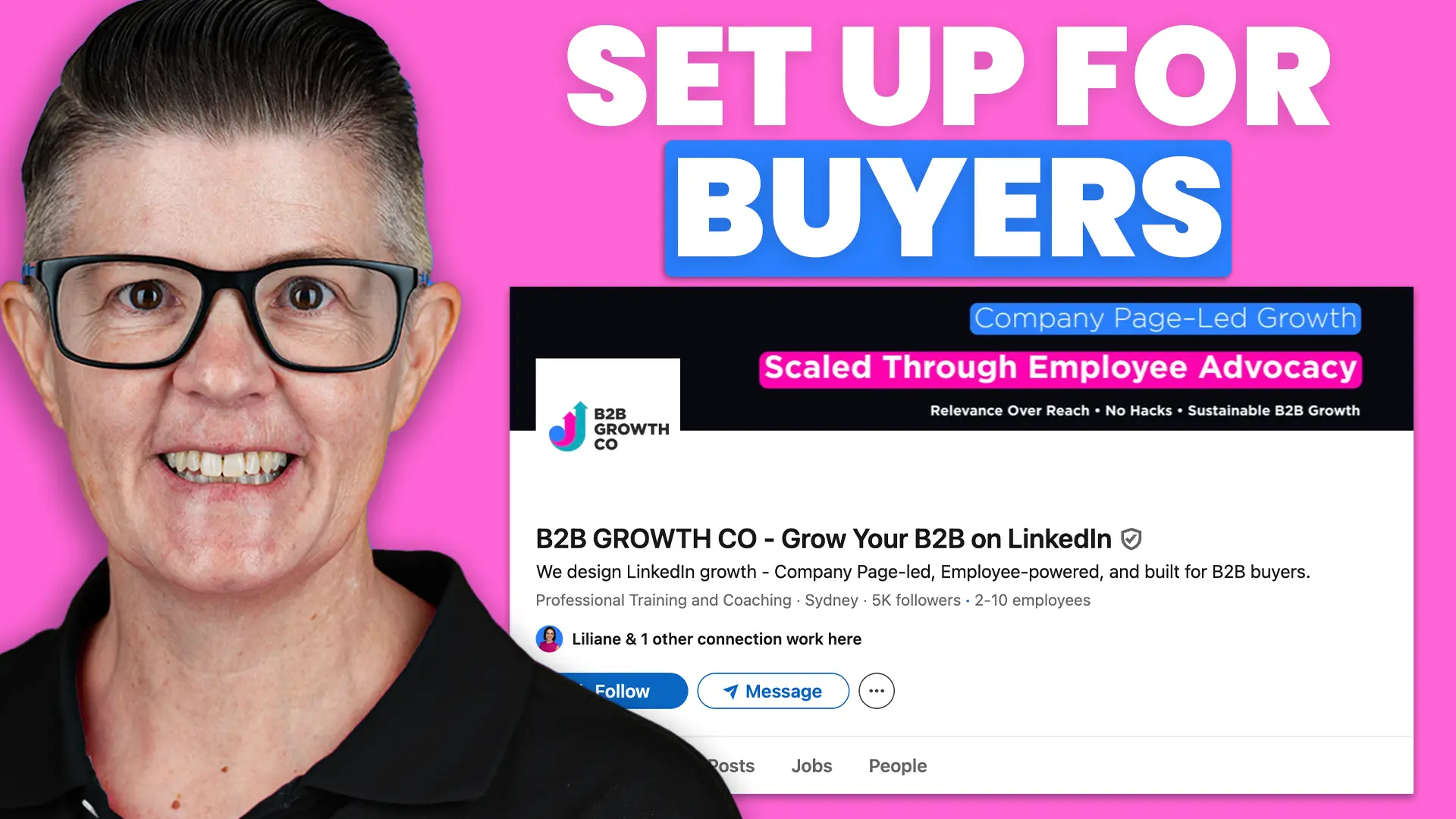
It’s easy to blame LinkedIn when a LinkedIn Company Page isn’t performing, but after six years of working closely with B2B Marketing teams and their Pages, I’ve found the real problems are usually much closer to home.
After doing so many LinkedIn Company Page Audit & Strategy sessions for global B2B organisations, I can now spot what marketing teams have missed and what’s holding their Page back pretty quickly.
The biggest issue is usually simple. The Company Page makes sense to the people inside the business because they already understand what the company does. Your buyer doesn’t have that context, and they’re unlikely to spend time trying to work it out.
That’s where my 10-Second Test comes in. More on that later…
This article is inspired by an episode of the Social Media for B2B Growth Podcast. Listen or watch to get the full impact of this conversation.
Most Company Pages Are Built for Internal Approval
Most LinkedIn Company Pages were set up years ago. The Page Admin today is so far down the line from the actual person who set it up.
What usually gets handed over to new Page Admins is a posting schedule, possibly some brand guidelines and a rough idea of how often content should go out. What rarely gets checked again is whether the Page itself still makes sense to the people the business wants to reach.
How does that happen exactly? Easier than you might think.
This usually happens as the Page Admins are desperately trying to keep internal stakeholders happy. This gets even harder for global B2B organisations. The team tries to fit every product, region, industry and service into one Page so nobody internally feels left out. The result is usually a message so broad that it could belong to almost any competitor.
They are about projecting how they want the company to be seen. I’m not sure the client is ever really factored in.
A LinkedIn Company Page shouldn’t be a record of everything the business has ever done. Its job is to help the right buyer quickly recognise that your business is relevant to them.

Clarity Has to Come Before Trust
When I review a Company Page, I’m looking for three things in this order: Clarity, Relevance and Trust.
Clarity comes first. Can someone quickly understand what you do, who you help and the problem you solve? If they can’t work that out within ten seconds, you’ve already made the buyer’s job harder than it needs to be.
Relevance is about whether they can see themselves in the Page. This is where company history and internal language often take over. You may be proud of when the business started, how many offices it has and how many products it sells, but that’s probably not the first thing the buyer needs to know.
Their first question is much simpler: can you help me?
The best way to make your Page more relevant is to use the language buyers actually use.
- Speak to customers.
- Ask your sales team what they keep hearing.
- Look at the questions that come up in calls, proposals, and new-client meetings.
When buyers see their own problems and priorities reflected back to them, they start to feel understood. That’s when trust has something solid to build on.
Your content then needs to back that up. Show buyers why they should believe you through:
- Customer stories that show real outcomes
- Practical advice from your experts
- Behind-the-scenes content that shows how the work gets done
- Employee expertise that gives the brand a human face
- Consistent content around the topics you want to be known for
Your Company Page makes the promise. Your content and your people prove it. That’s how trust is built.
Take the 10 Second Test to find out if your Company Page passes or fails 👇
Don’t Make Buyers Work Out What Comes Next
You can have a clear Page, useful content and plenty of proof, but there’s still one more thing that often gets missed. What do you want the buyer to do next?
After they’ve looked through your Company Page and had a poke around, is the next step obvious? Should they follow the Page, visit your website, download a resource, contact sales or speak to someone specific?
Don’t make them guess.
This doesn’t mean adding six different calls to action.
Choose the next step that makes sense for where the buyer is. Someone still researching may want a useful article, guide or customer story. Someone closer to making a decision may want a clear point of contact.
Your people and your Page also need to tell the same story.
If a buyer finds your business through an employee, salesperson or leader, the Company Page should continue what that person has already started. It shouldn’t feel as though they’ve landed at a completely different company.
Before you publish more content, look at the whole journey:
- How are buyers finding your LinkedIn Company Page?
- What should they understand within ten seconds?
- What proof will help them trust the business?
- What do you want them to do next?
That’s what turns a Company Page from a publishing channel into a useful part of the buyer journey.
Final Thoughts
What do you do? Who do you do it for? What makes your business different? If you can’t answer those questions clearly on your Company Page, there’s no way your ideal buyer can either.
Run the 10-Second Test. Ask someone outside the business to look at your Page for ten seconds, then tell you what they think the company does, who it helps and why someone should choose it.
Don’t explain it first. Don’t help them find the answer.
You may discover that what feels obvious to your team is only obvious because you work there every day. That’s one of the most common things I see when I audit LinkedIn Company Pages.
The good news is that once you can see the gap, you can fix it.
So, is your LinkedIn Company Page set up for your business or for your buyer?
Cheers!
Michelle J Raymond
PS: Want to hear my LinkedIn updates first? Subscribe to b2bgrowthco.com/newsletter