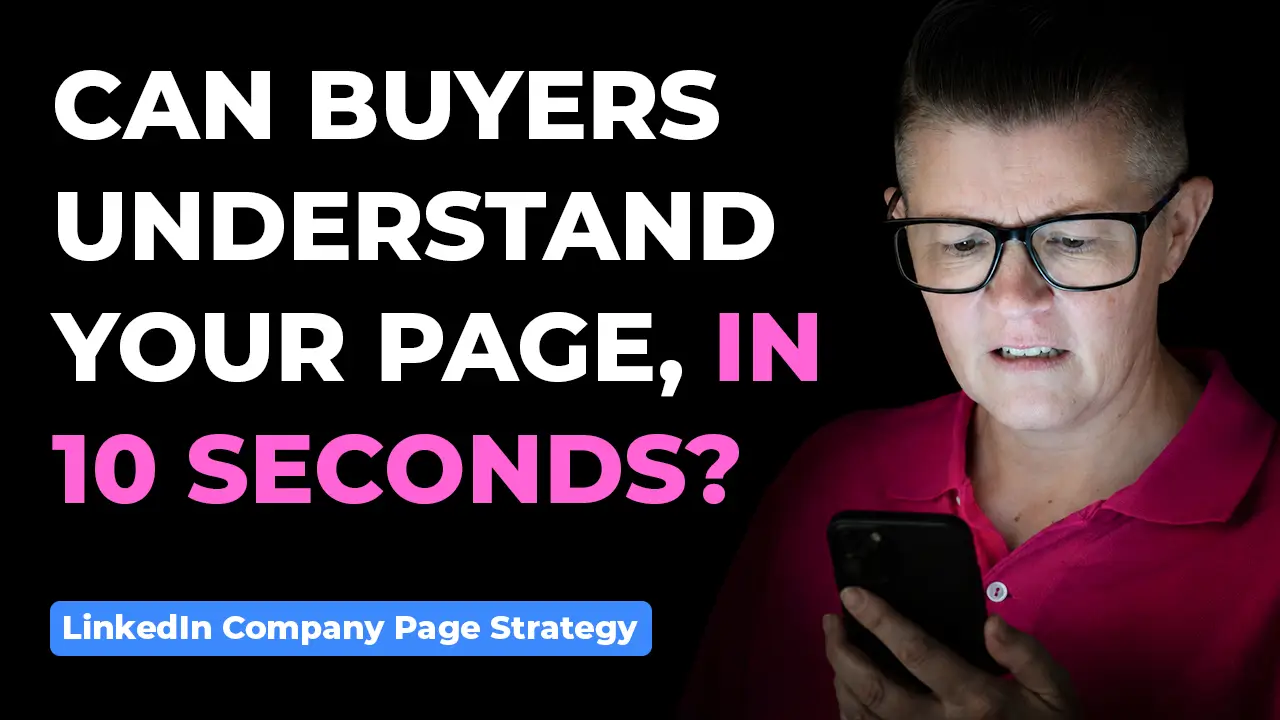
The 10-Second Test: Can B2B Buyers Understand Your Company Page?
After years of doing LinkedIn Company Page audits, I’ve learned that most LinkedIn Company Pages don’t have a content problem; they have a clarity problem.
The Company Page might be active and have regular posts going out. It might even have a decent number of followers. But when a potential buyer lands there, they still can’t quickly tell what the company does, who it helps or why it matters to them. That’s where the problem starts.
Because B2B buyers don’t work hard to understand your business. They don’t sit there trying to decode your banner, tagline, About section and latest posts. They scan quickly, form an impression and decide whether to stay or move on.
If your LinkedIn Company Page creates confusion in those first few seconds, it creates friction. And friction slows decisions. In B2B, that friction could be the reason your business never makes the shortlist.
As I often say, if you confuse ’em, you lose ’em.
Why LinkedIn Company Page Clarity Matters for B2B Buyers
Your LinkedIn Company Page is not just a place to post updates. It is part of how buyers form opinions about your business before they ever speak to sales.
By the time someone fills in a form, books a call or reaches out, they have often already compared options, noticed who keeps showing up and formed an opinion about who feels credible. Your Company Page is one of the places they may check while they are doing that research.
That doesn’t mean every visitor is ready to buy. Some people are seeing your brand for the first time. Some are quietly comparing you with competitors. Others are already close to making a decision and want to confirm they are looking at the right business.
This is why the 10-second test is useful. It strips everything back to the most important question: can someone quickly understand what your company does and who it is for?
Ask someone who doesn’t know your business to look at your Company Page for 10 seconds. Don’t give them hints. Don’t explain the background. Don’t tell them what to look for. Then ask them what they think your business does and who they think you help.
If they can’t answer clearly, your Page is relying too much on what you already know internally. It is not doing enough work for the buyer.
Why Your LinkedIn Company Page Messaging Feels Clear Internally, But Confusing to Buyers
One reason Company Pages become unclear is because the people managing them are often too close to the business.
You know what the company does. You know the products, services, teams, history, acronyms and internal language. You know why the business is different, because you live and breathe it every day.
But your buyer doesn’t have that context.
That’s why vague messaging can feel clear internally, but confusing externally. Phrases like “innovative solutions”, “industry-leading services”, “end-to-end support” and “helping businesses succeed” might sound professional, but they often don’t tell a buyer enough.
They don’t make your brand easier to understand. They make your brand easier to ignore.
The job of your Company Page is not to impress the internal team. It is to help the right buyer quickly know they are in the right place. That means your language needs to be simple, specific and buyer-focused.
Clear does not mean basic. Clear means useful.
Why Most LinkedIn Company Pages Are Built to Post, Not Convert
Many Company Pages were set up years ago and then barely touched again. The banner was added once, the tagline was written quickly, the About section was copied from the website and the featured section was either forgotten or filled with whatever was important at the time.
From there, the Page becomes a place where everyone in the business wants something posted.
Sales wants the event promoted. HR wants the new starter announced. Leadership wants the award shared. Finance wants the latest update published. None of these things are automatically wrong, but when they become the main purpose of the Page, the buyer disappears from the strategy.
Bit by bit, the Page becomes a glorified bulletin board.
And bulletin boards don’t convert.
A Company Page that converts has a clearer job. It helps the right people understand who you help, what problems you solve and why they should trust you. It is not just there to broadcast internal updates. It is there to support buyer confidence.

What B2B Buyers Should Understand From Your LinkedIn Company Page in 10 Seconds
Your LinkedIn Company Page does not need to explain every product, service, market, region and use case in the first few seconds. Trying to do that usually creates more confusion, not less.
What it does need to do is make the basics obvious.
A buyer should be able to quickly understand what your company does, who you help, what problem you solve and why your business is relevant to them. They should also start to get a feel for what you want to be known for.
This is where many brands get stuck. They try to speak to too many audiences at once. They list too many offers. They squeeze every message into the banner, tagline, About section and content plan.
The result is a Page that says a lot, but doesn’t say anything clearly.
Clarity comes from constraint. The more focused your message is, the easier it is for buyers to understand you. When everything is important, nothing stands out.
Start With Your LinkedIn Company Page Banner, Tagline and About Section
The 10-second test starts with the parts of your Company Page people see first. That includes your banner, tagline, About section and featured content.
These areas matter because they create the first impression. They also help LinkedIn, Google and AI tools understand what your business does. If those areas are vague, outdated or too internally focused, you risk reinforcing the wrong message.
Your banner should make the Page feel instantly relevant. Your tagline should say something meaningful, not generic. Your About section should explain who you help, what you do and why it matters in language your buyer would actually use.
Your featured section also deserves more attention than most businesses give it. Think of it as the front door to your Company Page. When someone lands there, the content you feature should help them see themselves, their situation or the problem they are trying to solve.
If your featured posts are old, random or purely promotional, they weaken trust. If they reflect the buyer’s world, they create confidence.
This is a simple fix, but it is often overlooked. Before you publish more content, check whether the Page itself is helping buyers understand you.

How to Make Your LinkedIn Company Page Content Clearer
The 10-second test is not only for your Page setup. It also applies to your content.
A buyer should be able to look at a post and quickly understand who it is for, what problem it is about and why it matters. If they have to work too hard to figure that out, they will usually keep scrolling.
This is where many Company Pages fall down. The content may be technically correct, but hard to follow. There are too many ideas, too much detail, too many audiences and no clear takeaway.
That kind of content looks busy, but it doesn’t move anyone forward.
A useful way to fix this is the 1-1-1 rule. One audience. One problem. One clear solution.
Before you publish your next Company Page post, ask yourself who the post is for, what problem it is solving and what one thing you want the reader to understand or do next.
If you can’t answer those questions, the post is not clear yet.
The problem is not always that your content is too long. Sometimes long content works well. The real problem is when one post is trying to do five jobs at once. In that case, it is often better to turn one overloaded post into several focused posts, each with a clear audience and purpose.
Use Mirror Content to Build Buyer Trust on LinkedIn
One of the biggest shifts B2B brands can make is to stop leading with the product and start reflecting the buyer’s reality.
This is what I call mirror content. For a deeper look at this approach, read more about mirror content for LinkedIn Company Pages and how it helps buyers feel understood before you introduce your solution.
Mirror content helps the buyer see themselves in your message. It starts with their problem, not your product. It reflects what they are dealing with day to day. It shows that you understand their pressure, priorities and risks before you introduce the solution.
Most brands do the opposite. They lead with the product, explain the features, list the benefits and talk mostly about themselves.
That might feel efficient, but it often skips the part that matters most. If the buyer does not feel understood, they don’t move.
Mirror content makes the buyer think, “That’s exactly what we’re dealing with.” Once they feel seen, your solution becomes more relevant. You have earned the right to talk about how you can help.
That is how Company Page content starts supporting the buying decision instead of simply filling the feed.
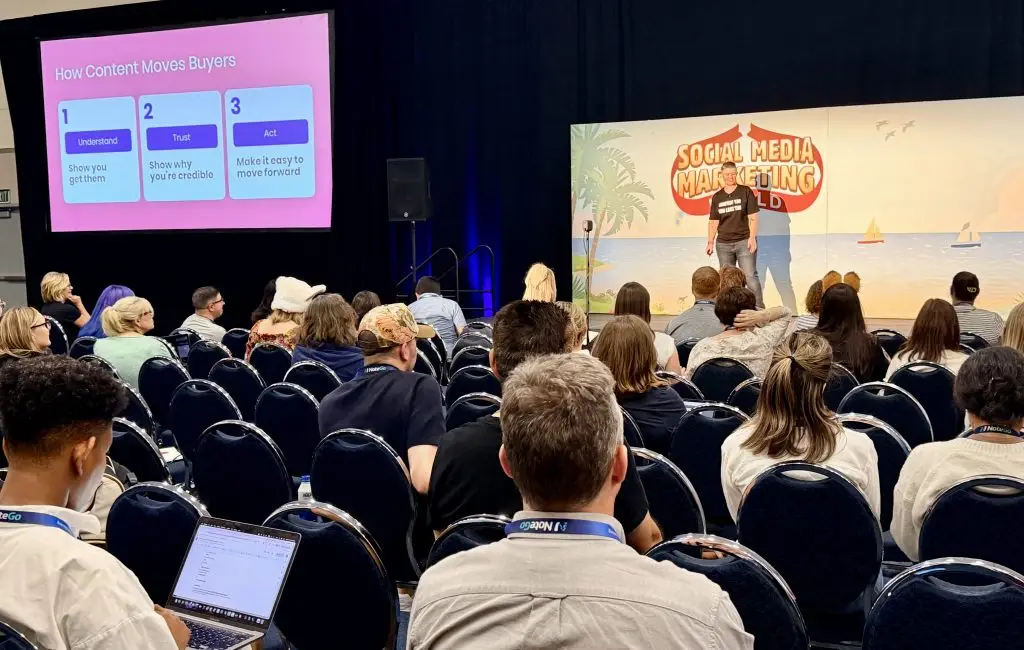
Don’t Make B2B Buyers Work to Understand Your Business
Confusion creates work for the buyer.
They have to work out what you do. They have to work out whether you are relevant. They have to work out which product or service applies to them. They have to work out what makes you different. Then they have to work out what to do next.
That is too much work, especially when they are already busy, distracted and comparing multiple options.
Your job is to remove as much friction as possible. That doesn’t mean dumbing things down. It means making the message easier to understand.
This is one of the reasons “posting more” is rarely the answer. More unclear content does not create more trust. It usually creates more noise.
If buyers are already confused, more posts won’t fix the problem. A clearer Page will.
The 10-Second LinkedIn Company Page Test Is About Progress, Not Perfection
The 10-second test is not about creating the perfect Company Page. It is about spotting where confusion is getting in the way.
You might find that your banner looks good but doesn’t say enough. You might find that your tagline sounds polished but is too vague. You might find that your About section talks about the company, but not the buyer. You might discover that your featured content is out of date or that your posts are covering too many different messages.
That is useful information.
Once you can see the friction, you can fix it. Start with one area. Update the banner. Rewrite the tagline. Refresh the About section. Change the featured posts. Simplify the next piece of content.
You don’t need to rebuild everything at once, but you do need to stop treating your Company Page as a dumping ground for internal updates.
Final Thoughts
Your LinkedIn Company Page should help B2B buyers feel confident that they are in the right place. That starts with clarity.
Can they quickly understand what you do? Can they see who you help? Can they recognise the problem you solve? Can they tell why your brand matters?
If the answer is no, your Page is creating friction before the conversation even starts.
And in B2B, that matters.
Buyers are forming opinions long before they speak to sales. They are watching, comparing and deciding who belongs on the shortlist. If your Company Page is unclear during that process, you may never get the chance to explain yourself later.
Company Pages don’t convert by accident. They convert by design.
So before you post more, test the Page you already have. Give someone 10 seconds, ask them what they understand and listen carefully to the answer.
Because if they’re confused, your buyers probably are too.
And if you confuse ’em, you lose ’em.
Need Help Making Your LinkedIn Company Page Clearer?
f your LinkedIn Company Page is active but still not helping buyers quickly understand what you do, who you help and why it matters, that is something worth fixing.
At B2B Growth Co, we help B2B teams turn their Company Page into a clearer, more strategic part of their LinkedIn presence, from Page optimisation and content strategy to employee advocacy and buyer trust.
[Learn more about our LinkedIn Company Page training for Page Admins]