white-star

LinkedIn Updates: What B2B Marketers Need to Know in October 2026

x-icon
LINKEDIN NEW FEATURES FOR B2B MARKETERS - MICHELLE J RAYMOND 2026

Any B2B marketer has a lot to keep up with, especially when you already have a demanding day job and a million other priorities competing for your attention.

There have already been more than 150 reported LinkedIn changes in 2026. The good news? You don’t need to know about every single update, and you certainly don’t need to jump on every new feature LinkedIn throws your way.

I’m more interested in which changes can genuinely affect your business, which ones are worth testing, and what they tell us about where LinkedIn is heading.

At a Glance:

  • LinkedIn’s latest updates cover Company Page controls, invitation tools, collaborative posts, feed tests and newsletters.
  • B2B marketers should check available Page controls, prioritise relevant invitations and test collaboration around genuine partnerships.
  • Monitor feed experiments, and assess newsletter performance beyond a single email open-rate figure.


This article draws on an episode of the Social Media for B2B Growth Podcast. Listen or watch for the full discussion.

Listen on Apple Podcasts

1. LinkedIn Company Page Verification Gives Admins More Control

False employee associations have long been a headache for LinkedIn Company Page admins. Someone adds your business to their work experience, and suddenly your brand is associated with a person who has never worked there.

For established brands attracting fake accounts, getting LinkedIn Help to remove those associations has been particularly frustrating (possibly the world’s biggest understatement 😉).

LinkedIn now allows admins of verified Company Pagesto remove known imposter associations so those accounts no longer appear in search results under the company’s name. This gives businesses more direct control over who appears connected to their brand.

Access depends on having a verified Company Page, which is only available on a Premium Company Page Plan.

Before considering a Premium subscription, check your Page’s verification settings. Your Company Page may have been verified before these changes took effect.

For smaller businesses, I’m not convinced paying for Premium solely to access this control makes financial sense. Assess the subscription’s wider benefits and how significant false employee claims are for your organisation.

Check LinkedIn’s Company Page verification requirements

My takeaway: Brand protection deserves a place in your Company Page strategy alongside content and audience growth. Assign someone to review suspicious employee associations and take action.

REMOVE FAKE LINKEDIN EMPLOYEES WITH MICHELLE J RAYMOND
Remove fake employees
LinkedIn Expands Verifications - Michelle J Raymond

2. Company Page Invitations: Prioritise Active, Relevant Connections

Some LinkedIn Page admins are seeing additional information when inviting connections to follow their Company Page, including when someone was last active. Gillian Whitney flagged this update, although it hadn’t appeared in my account when I recorded.

That information could help admins use invitation credits more thoughtfully. Someone who regularly uses LinkedIn has more opportunity to see your content and participate in the conversations around it.

However, activity should sit alongside relevance. An active connection still needs a reason to care about your business, whether they’re a potential buyer, customer, partner or industry contact.

For B2B organisations, the aim is to build an audience that values the company’s expertise and has a genuine connection to its market.

My takeaway: If activity information is available, use it to refine your invitations. Prioritise connections who fit your audience and give them a clear reason to follow through the content your Page publishes.

COMPANY PAGE INVITE TO FOLLOW CHANGE - OCTOBER 2026 - MICHELLE J RAYMOND

3. LinkedIn Collaborative Posts Make Partnerships More Visible

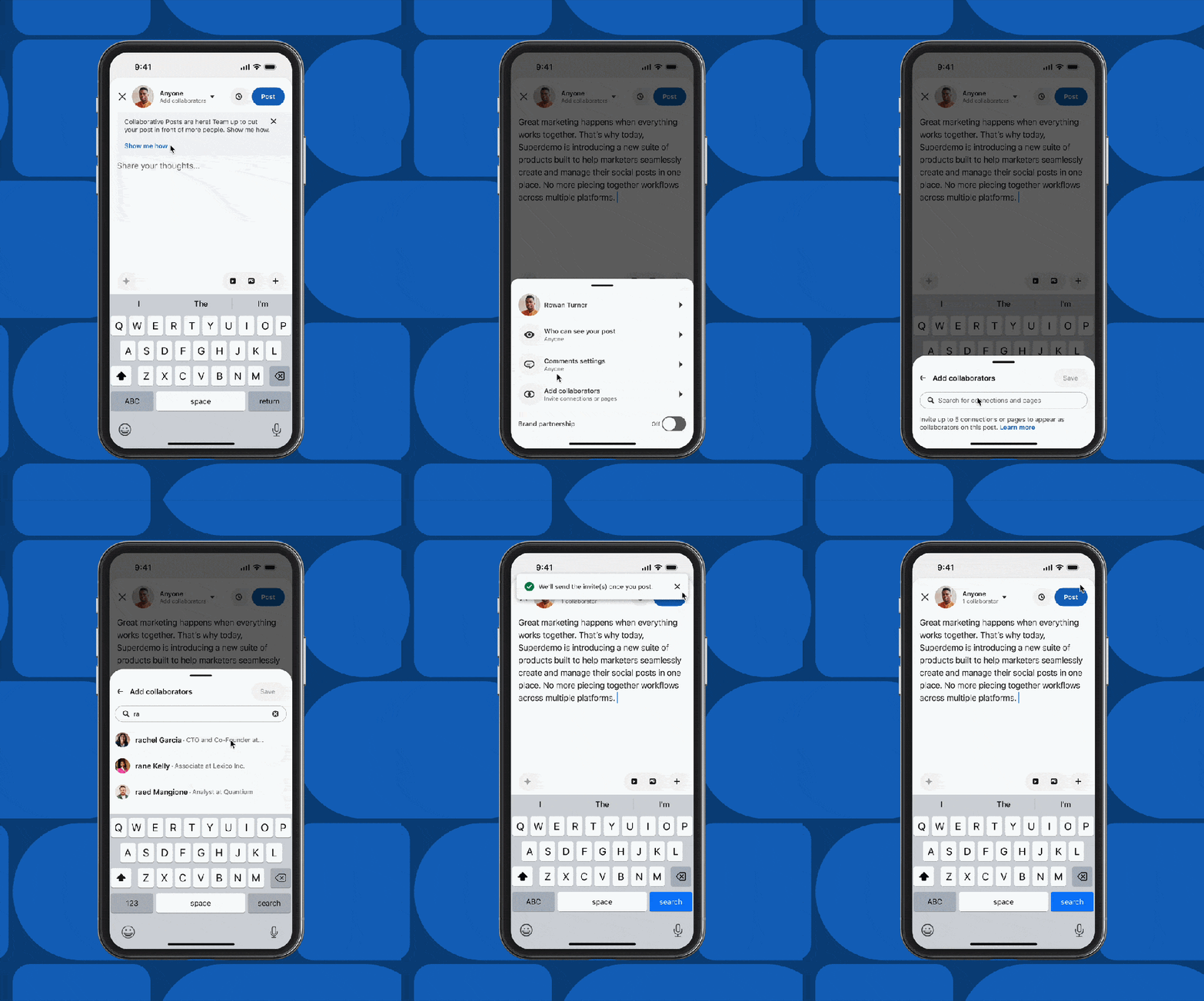
LinkedIn collaborative posts give B2B businesses another way to highlight relationships with customers, partners and employees. Eligible users can invite up to five collaborators, including members and Company Pages. Once accepted, collaborators appear prominently alongside the post’s authorship.

For B2B organisations, useful opportunities include:

  • Customer experiences: Share what working together achieved and what others can learn.
  • Employee expertise: Bring a specialist’s perspective into a topic relevant to your buyers.
  • Partner insights: Explore an industry challenge with a supplier or business partner.


These relationships give the collaboration a purpose beyond adding another name to a post.

collab-posts-creation-bg MICHELLE J RAYMOND

In my own testing, I haven’t seen a noticeable increase in reach. That hasn’t put me off the feature, because it also makes the people behind a business more visible.

It’s a practical way to apply something I’ve been teaching for years: LinkedIn is a Team Sport. Bringing employees into a relevant conversation from the start gives their expertise a more meaningful role than simply asking them to repost Company Page content.

My takeaway: Choose collaborators who can add knowledge, experience or a useful perspective for your buyers. Let the shared story drive the decision, not the hope of extra impressions.

4. LinkedIn’s Feed Test Could Bring Relationships Back Into Focus

LinkedIn is testing two feed tabs: Network, focused on people members have connected with or followed, and For You, designed to surface relevant insights from professionals inside and outside their network. The test could give members more choice over how they maintain relationships and discover new expertise.

That choice matters for B2B businesses. Professional relationships take time to build, and staying connected with customers, partners and industry contacts is part of LinkedIn’s value.

I’ve noticed more content from other LinkedIn experts in my own feed, including competitors, and less from the B2B marketers and business connections I want to stay in touch with. Learning from peers has value, but sharing an interest in Company Pages doesn’t make someone a potential customer.

For B2B marketers, being visible isn’t the same as being visible to the right people.

The opportunity is to maintain relationships with an established network while helping relevant new audiences discover the business’s expertise.

I’d welcome a better balance between those experiences, including more opportunities for Company Pages to participate. However, this remains a test, so any visibility improvements need to be demonstrated.

My takeaway: Keep building relationships with the people your business wants to reach. Monitor the feed experiment, but give your team a stronger reason than an interface change before revising its strategy.

Linkedin Feed Test - October 2026 - Network and For You - Michelle J Raymond

5. Don't Give Up on LinkedIn Newsletters

Safe to say, recent changes to LinkedIn newsletter open-rate reporting have frustrated publishers, particularly when figures show zero or disappear altogether. If you missed it, here’s what’s been happening with LinkedIn Newsletter Open Rates, and why.

Losing visibility into performance makes it harder to assess results, but that metric alone doesn’t establish whether an edition reached its subscribers.

Look at the available signals together:

  • Article views: Are people still reading your editions?
  • Subscriber changes: Is the newsletter attracting new subscribers?
  • Reader responses: Are relevant people commenting, asking questions or starting conversations?


Alongside those frustrations, there are developments worth watching. I’ve seen new desktop and mobile navigation options that make newsletters more prominent, with recommendations extending beyond those someone already subscribes to.

LinkedIn Newsletters Im subscribed to - Michelle J Raymond

Potential inclusion in AI-generated answers adds another reason to publish clear explanations grounded in real experience. The starting point remains answering questions your buyers care about. For businesses investing time in useful, specialist content, better discovery could help more readers find it.

Learn more about using LinkedIn to get cited in AI answers.

I’m keeping LinkedIn newsletters firmly in my 2027 strategy.

They give businesses space to explain complex topics, demonstrate expertise and build familiarity over time both on and off LinkedIn.

My takeaway: Leave the analytics problems to LinkedIn and spend your time giving readers a reason to subscribe.

Newsletter Growth Lab - b2b growth
Want to get the best out of your newsletter? Book my newsletter strategy session.

Final Thoughts

Looking at these updates, I see LinkedIn investing in trust and creating more commercial opportunities around B2B expertise. As I often say, follow the money. It helps explain why the platform pays attention to certain features.

For B2B marketing teams, the decision is whether those features deserve yours. A new tool earns its place when it solves a problem, supports your goals or helps your Company Page and people work together more effectively.

Keep an eye on developments, test selectively and give yourself permission to leave some features alone. Your team’s time is valuable, and building relationships, sharing useful expertise and supporting buyers all need a share of it.

LinkedIn will keep changing. Let your business goals decide which updates deserve your team’s time.

Which of these updates could solve a real problem for your business?

Cheers!

Michelle J Raymond

PS: Want to hear my LinkedIn updates first? Subscribe to b2bgrowthco.com/newsletter

author avatar
Michelle J Raymond Founder & B2B LinkedIn Strategist
Michelle J Raymond is a B2B LinkedIn strategist and Founder of B2B Growth Co. She helps B2B marketing teams align Company Pages, employees and leaders to build brand awareness, demand generation and stronger buyer confidence.