white-star

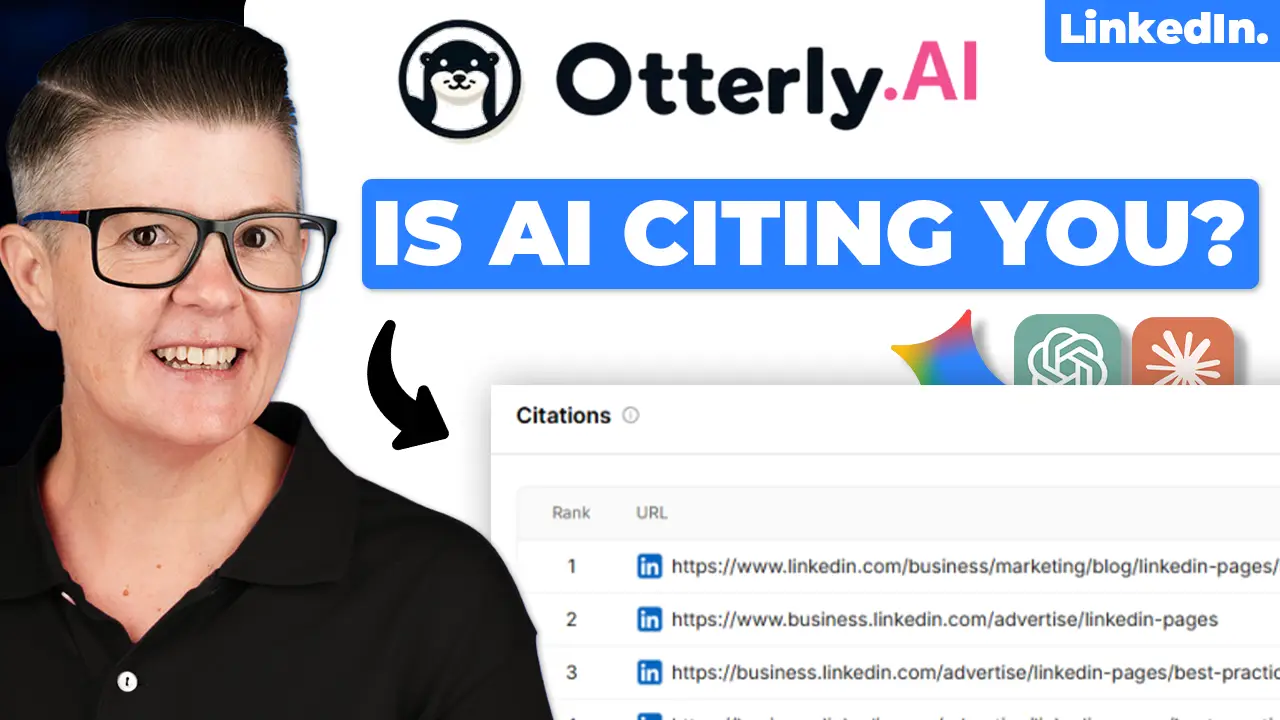
Is Your LinkedIn Content Being Cited by AI?

x-icon
OTTERLYAI REVIEW - MICHELLE J RAYMOND

This is something I’m pretty excited about right now.

The prize for creating strong LinkedIn content may now be much bigger than reach, engagement, and what happens inside the LinkedIn home feed.

The same Company Page posts, employee content, and expert insights you’re already creating could also help your brand appear in AI-generated answers.

That means your LinkedIn work may be doing more heavy lifting than you realise.

But there’s a catch.

You need to know what’s actually being cited, where your brand is missing and whether competitors are getting the visibility instead.

Because this isn’t an invitation to create more content for the sake of it. It’s an opportunity for B2B brands to get smarter about where they focus their time, budget and expertise.

Right now, most marketing teams I talk to are still flying blind, and I want to share how to fix this.

LinkedIn Content Is Already Being Cited By AI

OtterlyAI analysed more than 1.3 million LinkedIn citations across ChatGPT, Perplexity, Google AI Overviews, Google AI Mode, Microsoft Copilot and Gemini.

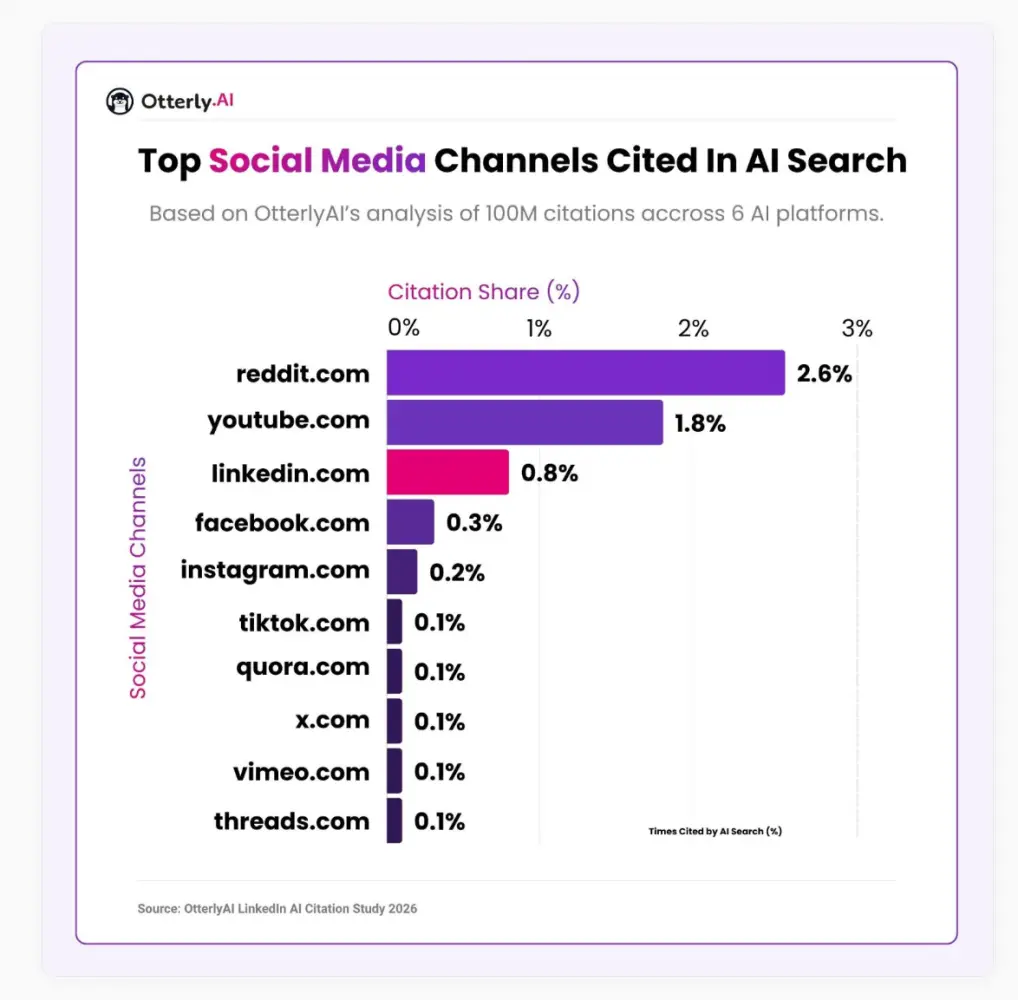
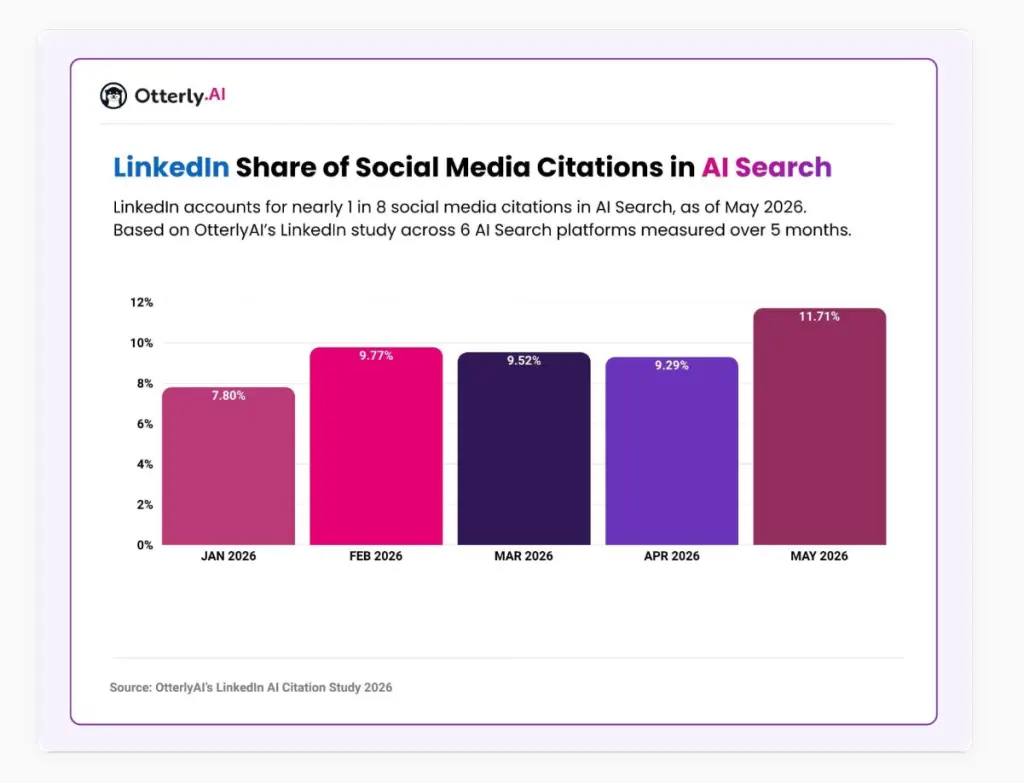
The research found that LinkedIn accounted for nearly one in eight social media citations in AI search.

This means that LinkedIn content isn’t only being seen in the feed. It can also become part of the information AI platforms use when answering buyer questions.

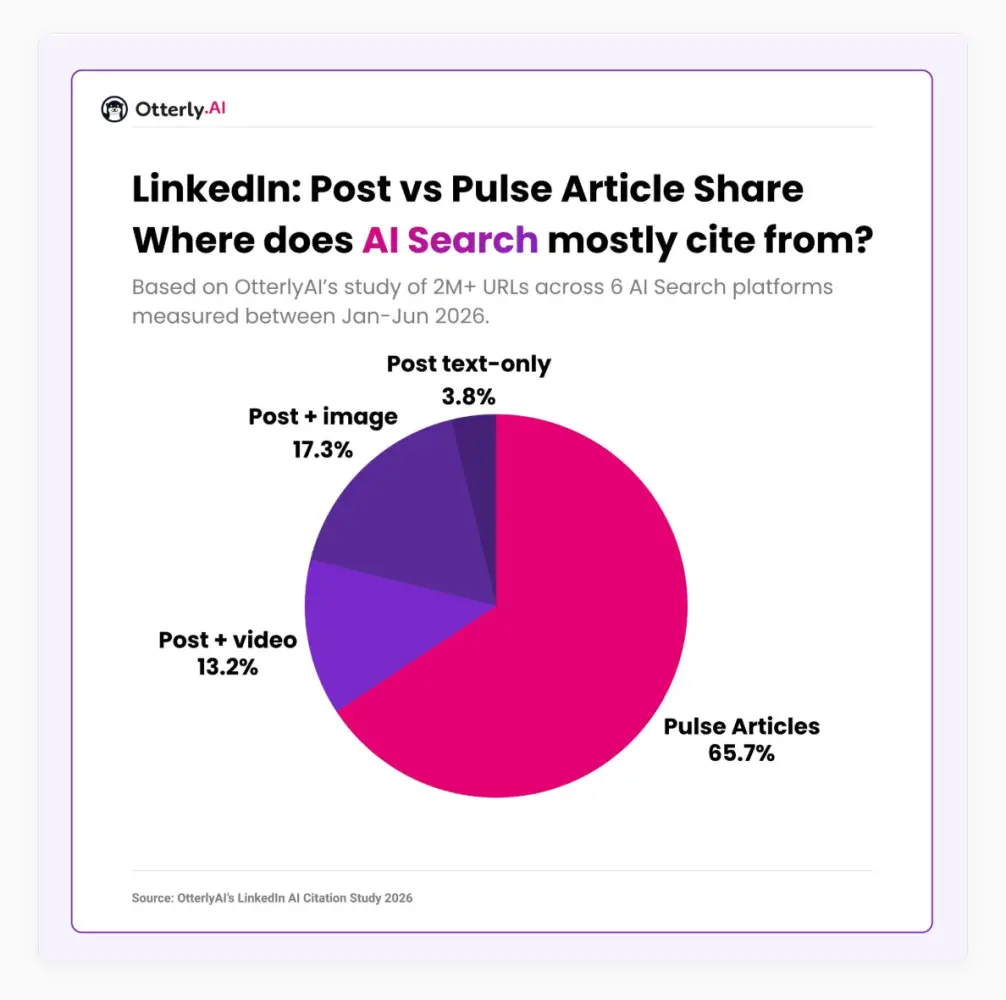
But the research also showed that not all LinkedIn content is treated equally.

  • Long-form LinkedIn articles accounted for 72.2% of content citations, compared with 26.1% for posts.
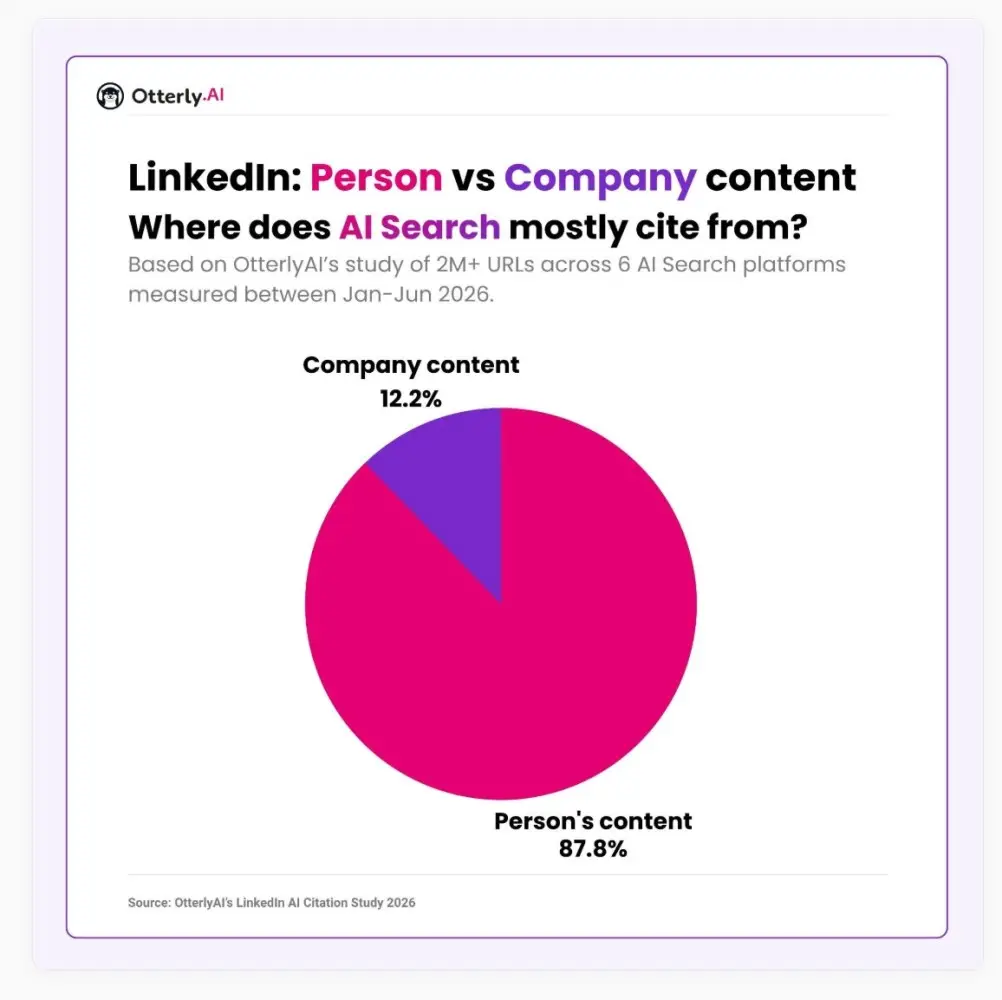
  • Content from named individuals also received a larger share of citations than content from Company Pages or unattributed content.

That doesn’t mean Company Pages no longer matter. It means brands need to think more strategically about the different roles played by the Page, employees, subject-matter experts, and owned website content.


AI Reference Value Is Different From LinkedIn Popularity

One of the findings that made me happiest was that LinkedIn engagement didn’t predict AI citations. Likes, comments, hashtags, emojis, images, and videos all showed little to no positive relationship with how often content was cited.

What performs well in the feed isn’t necessarily what becomes a useful source for AI.

This makes me want to do a happy dance.

  • LinkedIn engagement measures how people respond to content on the platform.
  • AI citations reflect whether content provides a clear, complete and useful answer to a particular question. 🥳


The research doesn’t prove that publishing a longer article or writing under an individual’s name will automatically earn citations. It only examined LinkedIn URLs that had already been cited, so the findings show patterns rather than a guaranteed formula.

But the direction is clear.

Reference value matters more than surface-level popularity.

This Strengthens The Case For Company Pages and People

I’ve said for years that LinkedIn works best as a team sport. The Company Page builds the official brand presence. Employees and subject matter experts bring experience, expertise and personal credibility.

The opportunity isn’t to choose between the Company Page and employees. It’s to coordinate them, or as I call it, “The Power of Two”.

  1. The Page can create clarity around what the organisation does and wants to be known for.
  2. Employees can add individual insight, proof and experience.
  3. Website content can provide deeper, owned resources.


Together, those assets give both buyers and AI platforms a clearer picture of the brand.

The next challenge is proving whether that approach is working.

How Do You Know Whether Your LinkedIn Content Is Being Cited by AI?

You could manually enter the same prompts into ChatGPT, Perplexity, Google AI and the other platforms.

Then you could record:

  • whether your brand appeared
  • which competitors were mentioned
  • where your brand appeared in the answer
  • which pages and domains were cited
  • how those answers changed over time

That quickly becomes unmanageable and certainly isn’t scalable or something that happens on autopilot.

OtterlyAI is an AI Search Monitoring and Optimisation Platform that automates this process.

  • You choose the conversational prompts that matter to your buyers, and OtterlyAI monitors the answers across major AI search platforms. It tracks brand mentions, competitor visibility and the websites or individual pages being cited.
  • Important note: it works alongside existing SEO tools, not replaces them.

Traditional SEO tools help you understand how your website performs in search.

OtterlyAI helps answer a different question: Does AI mention your brand, cite your content, and include you in the answers buyers receive?

What Marketers Can Learn From Citation Gaps

A brand mention tells you that an AI platform included your name.

A citation shows which page it used as a source.

That could be:

  • your website
  • a LinkedIn article or newsletter
  • content connected to an employee or expert
  • an industry publication
  • a competitor’s website
  • another third-party source

OtterlyAI tracks cited domains and individual URLs so teams can see which sources are being used and where gaps exist.

This allows marketers to move beyond:

We need to create more content.

And ask a better question:

Which buyer questions are we missing from, and which sources are AI platforms currently using instead?

That evidence can help shape LinkedIn content, website resources, SEO, thought leadership and PR activity.

See How OtterlyAI Works

Final Thoughts

The real value isn’t finding one positive mention when you look at the data and your AI citations.

It’s seeing:

  • where your brand is missing
  • which competitors are appearing instead
  • which sources AI platforms trust
  • where your next content opportunity may be

Start an OtterlyAI free trial today here. Let me know what you discover in the comments.

author avatar
michelle@b2bgrowthco.com Founder
Michelle J Raymond is an international LinkedIn strategist specialising in Company Page growth and employee advocacy. She works with B2B marketing and leadership teams to align LinkedIn with commercial outcomes and long-term brand credibility.