Most B2B LinkedIn Company Page content starts in the wrong place: with the company.
A product update. A new service. An event. A report. A campaign. A team announcement. All of these can be useful, but only when the buyer can quickly understand why they matter.
That’s where many Company Pages fall down. The content might be accurate, professional and fully approved internally, but if the buyer can’t see themselves in the message, they are unlikely to care.
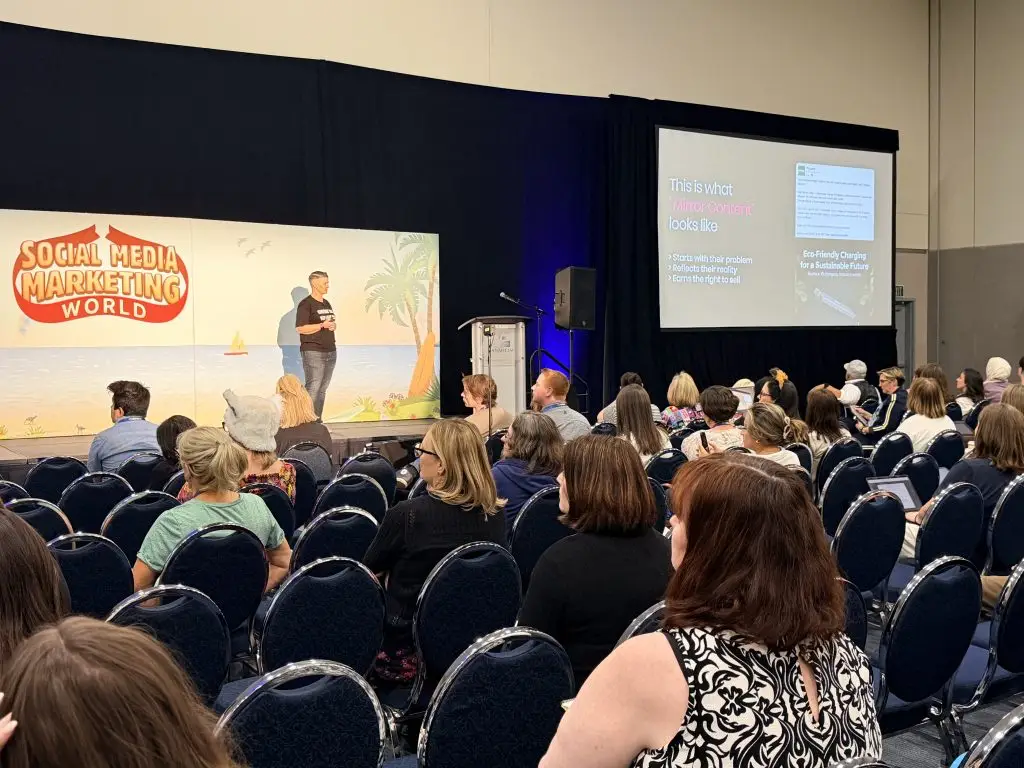
This is why mirror content matters.
Mirror content is content that reflects the buyer’s problem, situation or decision before introducing your company’s solution. It helps the right person think, “That’s exactly what we’re dealing with.”
When that happens, your Company Page stops feeling like a bulletin board and starts becoming part of your B2B LinkedIn strategy.
What is Mirror Content on LinkedIn?
Mirror content is LinkedIn content that starts with the buyer’s reality, not the company’s offer.
It reflects what the buyer is dealing with, the pressure they are under, the problem they need to solve or the decision they are trying to make. Instead of asking the buyer to work out why your post is relevant, mirror content makes the relevance obvious.
For B2B brands, this matters because buyers are rarely ready to act the first time they see your content. They are noticing, comparing, checking credibility and forming opinions over time. Your LinkedIn Company Page plays a role in that process.
A buyer may land on your Page after seeing a post, hearing about your business, being referred by someone else or comparing you with other providers. When they get there, they are looking for signals that help them decide whether your business is relevant, credible and worth shortlisting.
Mirror content gives them one of the strongest signals: this company understands our problem.
Why Product-First LinkedIn Content Falls Flat
Most LinkedIn Company Page posts are created from the business’s point of view. The starting question is often, “What do we need to promote this week?”
That might be an event, a guide, a service, a partnership or a product feature. The issue is not the thing being promoted. The issue is the way it is framed.
When a post leads with the product or announcement, the buyer has to do the work. They have to connect the feature to their problem, decide if the message applies to their role, understand why it matters now and work out what action to take next.
Most buyers won’t make that effort. They are busy, distracted and scrolling quickly. They don’t have time to decode your message.
That doesn’t mean your offer is weak. It often means your content is starting in the wrong place.
Mirror content reduces friction by starting where the buyer already is. It names the problem first, reflects the situation and then connects your solution to something the buyer already cares about.
That is how Company Page content starts to move buyers, instead of simply filling the feed.
Mirror Content Examples for LinkedIn Company Pages
Generic Company Page content often sounds polished but vague. It might say something like:
“We’re excited to launch our new solution designed to improve efficiency and support better business outcomes.”
That sentence may sound professional, but it does not give the buyer much to recognise. What kind of efficiency? Which business outcomes? Who is this for? Why should they care?
A mirror content version starts with the buyer’s situation instead:
“Marketing teams are under pressure to prove LinkedIn is creating more than impressions. The challenge is knowing which signals show buyer intent and which ones are just surface-level engagement.”
This version is more specific. It names the audience, reflects the pressure and points to a problem the buyer may already be facing. From there, you can introduce the solution with more relevance.
The difference is not just better copy. It is a better strategy. Generic content asks the buyer to care, and mirror content gives them a reason to care.
Why Buyers Need to Feel Understood Before They Act
B2B decisions carry risk. Buyers are often dealing with multiple stakeholders, long decision cycles, budget pressure and the fear of choosing the wrong provider.
They are not only looking for information. They are looking for confidence.
Your LinkedIn Company Page content can help create that confidence when it shows that your business understands more than the product. It shows you understand the context around the purchase.
What is the buyer measured on? What problem keeps showing up in their team? What risk are they trying to avoid? What do they need to explain internally? What would make the decision easier?
These are the kinds of questions that lead to stronger Company Page content. They move the focus away from what your business wants to say and towards what your buyer needs to recognise.
When buyers feel understood, they are more likely to keep reading. They are more likely to trust your perspective. They are more likely to see your business as relevant.
If they don’t feel understood, they don’t move.
How to Create Mirror Content For Your LinkedIn Company Page
The simplest way to create mirror content is to stop starting with the thing you want to promote.
Start with the buyer instead.
Before writing your next Company Page post, ask:
- Who is this for?
- What are they dealing with right now?
- What problem are they trying to solve?
- What do they need to understand before they take action?
- What would make them think, “That’s exactly us”?
Once you are clear on that, you can decide where your product, service, guide, event or offer fits.
If you are promoting an event, don’t only say your team will be there. Lead with the problem your buyers are attending to solve.
If you are sharing a guide, don’t only announce the guide. Lead with the decision or challenge the guide helps them work through.
If you are talking about a service, don’t start with what the service includes. Start with the situation that makes the service necessary.
The offer can still appear, but it is no longer the opening act. The buyer is.
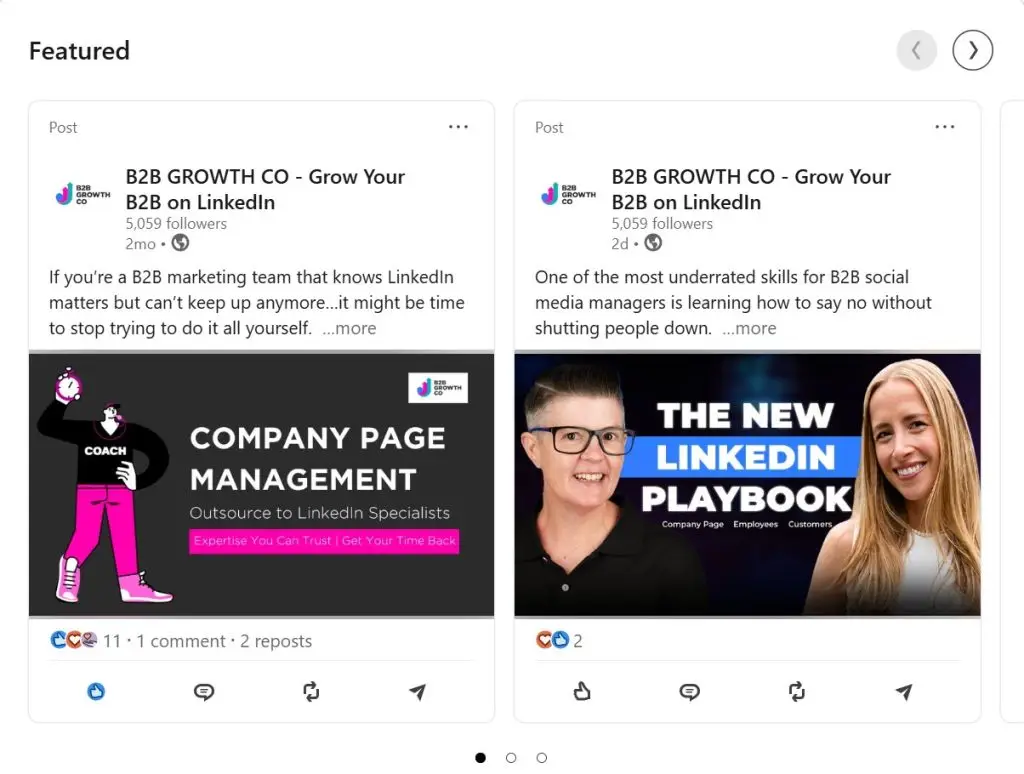
How To Use LinkedIn Company Page Featured Section
Mirror content should not only apply to your regular posts. It should also shape your LinkedIn Company Page featured section.
Think of the featured section as the front door to your Page. When a buyer lands there, the content you feature should help them quickly understand that they are in the right place.
If your featured posts are old, random or purely promotional, they may weaken trust. If they reflect the buyer’s problems, priorities and questions, they can build confidence.
A good featured section helps answer:
- Does this company understand our problem?
- Do they work with businesses like ours?
- Is their thinking relevant to what we are trying to solve?
- Should we keep exploring?
Not every featured post needs to sell directly. In many cases, the strongest featured posts are the ones that show you understand the buyer before you ask them to take action.
Use Sales and Customer Teams to Find Better Mirror Content Ideas
Marketing teams do not need to guess what buyers care about. The answers are usually already inside the business.
Sales knows the questions buyers ask before making a decision. Customer service knows what frustrates customers. Delivery teams know what clients misunderstand before they start. Product teams know which problems the solution was built to solve.
If your Company Page content is created too far away from those conversations, it can sound polished but disconnected.
Better mirror content comes from better inputs.
Ask your customer-facing teams what questions keep coming up, what objections slow down decisions and what buyers need to explain to their internal stakeholders. Those conversations give you practical content ideas that are grounded in real buyer problems.
They also make your content easier for employees to support. When your team sees their own customer conversations reflected in the Company Page content, they are more likely to engage with it, share it and add their own context.
That is where mirror content connects with the Power of Two. The Company Page creates clarity. Employees add context.
Mirror Content Still Needs a Clear Sales Path
Starting with the buyer does not mean avoiding sales. Mirror content is not about hiding what you sell or making every post purely educational. It is about making your offer more relevant by connecting it to the buyer’s real problem.
You can still promote your services. You can still talk about your products. You can still include a clear call to action.
The difference is the order.
When you lead with the product, the buyer has to decide if it matters. When you lead with the problem, the buyer can see why it matters. That gives your offer stronger context.
B2B buyers do not need more vague content that never leads anywhere. They need useful content that helps them understand their problem, trust your perspective and know what to do next.
Final Thoughts
Mirror content is one of the simplest ways to make your LinkedIn Company Page more useful, relevant and buyer-focused.
It shifts your content from company-first updates to buyer-first messaging. It helps your audience see their own problems in your content before you ask them to care about your solution.
That matters because your Company Page is not just a place to post. It is part of how buyers form opinions about your business before they contact sales.
When your content reflects the buyer, you reduce confusion. You make it easier for people to understand why your business matters. You give them a reason to trust you and a clearer path to move forward.
Content that only talks about the company fills the feed.
Content that reflects the buyer builds trust.
Need a Clearer LinkedIn Company Page Strategy?
If your LinkedIn Company Page still feels more like a company bulletin board than a buyer-focused trust-building asset, it may be time to take a closer look.
At B2B Growth Co, our LinkedIn Audit and Strategy helps B2B businesses understand what’s working, what’s creating confusion and what needs to change to turn their Company Page into a stronger part of the buyer journey.
We review your Page through the eyes of your ideal buyer, looking at your positioning, content, featured section, calls to action and opportunities to better connect your Company Page with employee advocacy.