Let me begin by saying that I think too many B2B brands are treating employee advocacy like a content-sharing programme.
You know the type. Marketing writes the post. Employees are asked to share it. Everyone feels busy. The report shows a few more impressions, maybe some likes, and the box gets ticked.
But if that’s the whole strategy, we’re missing the bigger opportunity.
Employee advocacy isn’t about getting more people to post more brand content. It’s about helping the right people inside your business become visible, useful and trusted before buyers are ready to speak to sales.
This article is inspired by the recent episode of the Social Media for B2B Growth Podcast hosted by Michelle J Raymond. Joined by Colin Day from Oktopost to look at why employee advocacy needs to move beyond distribution and become part of a smarter B2B growth strategy.
Employee Advocacy Is Not a Content Distribution Machine
If your employee advocacy programme is built around copy-and-paste content, it might help you push posts further. But it won’t build the kind of trust that moves B2B buyers forward.
Reach matters, but reach without credibility is just noise. The real value comes when employees add their own experience, point of view and context.
A strong advocacy programme should help employees answer:
- What does this topic mean for our customers?
- What have I seen in the market that makes this relevant?
- What practical insight can I add from my role?
- What would I say if I were explaining this to a client or peer?
That’s where the post stops sounding like it came from a content machine and starts sounding like it came from someone who knows what they’re talking about.
“If employee advocacy is simply about getting employees to post more content, then you’ve really built a distribution engine that no one particularly trusts.” Colin Day, Oktopost
That’s a hard truth, but it’s one teams need to hear. Advocacy isn’t about turning employees into billboards. It’s the job of helping them become credible voices in the market.
Tip 👉 Give employees storylines, not scripts. Give them the idea, the customer problem, the context and the guardrails, then let them bring their own voice to it.

Buyers Are Watching Before They Ever Speak To Sales
One of the biggest mistakes in B2B marketing is assuming that interest only counts when someone clicks, comments, fills in a form or books a call.
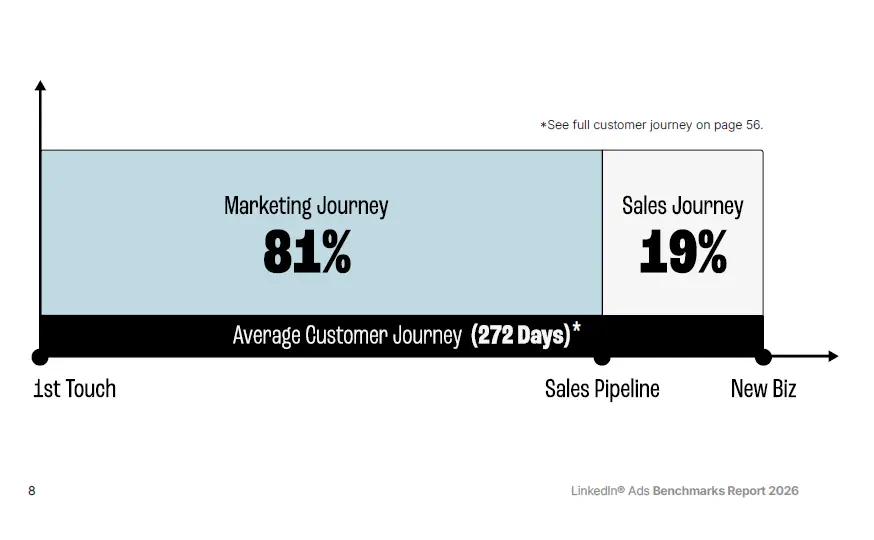
That’s not how buying works anymore, especially on LinkedIn. Buyers are reading quietly. They’re comparing opinions. They’re checking who shows up, who has expertise and who seems credible long before they appear in your pipeline.
This is why employee advocacy matters. Your people can influence the hidden part of the buying journey, the part your dashboard might not fully capture.
A sales engineer sharing a practical lesson, a customer success manager explaining a common challenge, or a consultant commenting on a market shift can all build familiarity over time. Not because they’re selling, but because they’re helping buyers make sense of the problem.
I’ve seen this in my own LinkedIn journey. People would come up to me at trade shows and mention a post from four, five or six months earlier. They hadn’t liked it. They hadn’t commented. But they were watching, remembering and connecting the dots.
Tip 👉 Create content for the quiet buyer, not just the visible engager. Ask, “If someone reads this and never clicks, will they still understand what we know, what we stand for and how we can help?”
The Power of Two - Your Company Page and Employees Need To Work Together
There’s a regular debate that keeps showing up on LinkedIn. Should brands focus on the Company Page or employee profiles?
My answer hasn’t changed. It’s not either/or. It’s The Power of Two.
Your Company Page is the foundation of credibility. It gives the brand consistency, positioning and a home that doesn’t disappear when employees move on. Your employees bring the human layer. They create trust, relevance, relationships, and reach in ways a logo can’t do on its own.
The mistake is expecting one side to do the whole job. A Company Page without employee voices can feel too polished or distant. Employee advocacy without a strong Company Page can feel scattered and hard to connect back to the business.
A stronger system looks like this:
- Use the Company Page to set the brand point of view.
- Use employees to add expertise, examples and human context.
- Use Page Advocacy to help employees engage with brand content in a useful way.
- Use leaders and subject-matter experts to build trust around key themes.
This is why growing a brand on LinkedIn is a team sport. The Page and the people each have a role, and the magic happens when they work together instead of competing for attention.
Tip 👉 Stop asking whether the Page or employees matter more. Ask how the Page can guide the message and how employees can make it more trusted, useful and human.

Measure Influence, Not Just Activity
B2B marketers are under pressure to prove the value of social, so it’s easy to fall back on the numbers that are easiest to report.
Likes. Comments. Shares. Impressions. Engagement rate. They’re not useless, but they’re not the whole story.
If those are the only numbers you use, they can drive the wrong behaviour. You start creating content for visibility rather than business influence.
Employee advocacy needs better questions behind it:
- Are target accounts engaging with our people?
- Are employees starting useful conversations?
- Is social content influencing inbound enquiries?
- Are sales conversations warmer because buyers already know us?
- Is organic social contributing to pipeline, trust or deal momentum?
This is where B2B marketing needs to mature. We need to stop treating social like a side channel that only reports activity and start treating it as part of the go-to-market system.
That doesn’t mean every post needs to have a direct revenue line attached to it. B2B buying is too complex for that. But it does mean we need to look beyond surface-level numbers and pay attention to signals that show trust, credibility and buyer movement.
Tip 👉 Keep tracking activity, but don’t stop there. Add influence-based measures that show whether advocacy is helping the business become known, trusted and chosen.
Final Thoughts
Employee advocacy works best when it stops being about content distribution and starts being about trust.
Your people are not there to repeat the brand message like a script. They’re there to bring expertise, experience and credibility into the conversations your buyers are already having. That takes support, structure and confidence, not control.
The Company Page still matters. Employee voices matter. Leaders matter. Subject matter experts matter. The opportunity is to get them working together so your brand is visible, useful, and trusted before the buyer ever raises their hand.
That’s B2B Growth. No Hacks.
So here’s the question worth asking before your next employee advocacy push: “Are we helping our employees share more posts, or are we helping them become more trusted voices in the market?”
Cheers
Michelle J Raymond