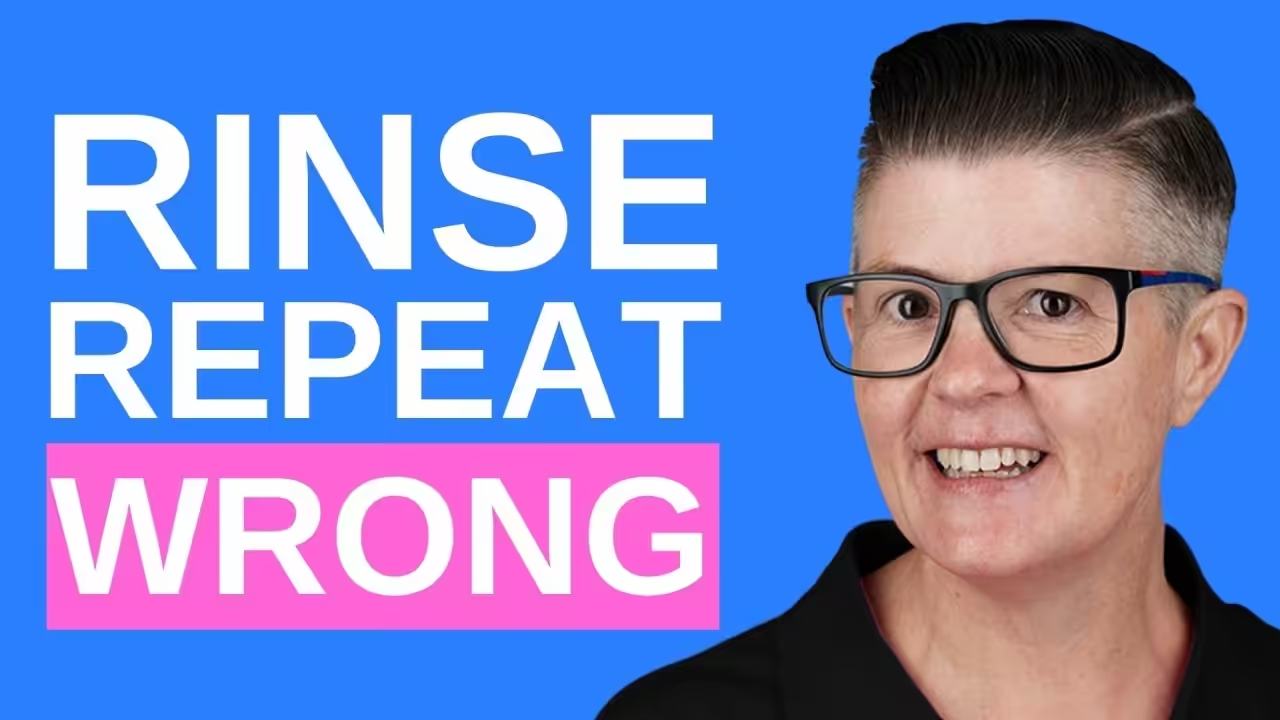
If your 2027 LinkedIn Company Page strategy is basically this year’s plan with a new content calendar, we need to talk.
I get that most B2B Marketing teams are already stretched, so when it comes time to plan for another year, it’s understandable that much of the existing LinkedIn strategy gets carried forward. The content pillars stay. The posting cadence stays. The same metrics appear on the dashboard. A few new ideas get added, and suddenly you have a 2027 plan.
But LinkedIn has changed significantly over the past 12 months. How content is discovered is changing, and AI is no doubt influencing visibility on and off the platform. That doesn’t mean everything you did in 2026 is wrong.
It does mean rinse-and-repeat isn’t a LinkedIn strategy that will work for 2027.
Before you decide what you’ll post next year, here are five areas I recommend you look at.
This article is inspired by an episode of the Social Media for B2B Growth Podcast. Listen to the episode for the full details.
1. Get Clear on the Job of the Company Page
One of the easiest traps for B2B marketing teams is starting LinkedIn planning with content. How often should we post? Which formats should we use? What performed best this year? What should our content pillars be?
They’re useful questions, but they’re not where I’d start.
I’d start with: What job does our LinkedIn Company Page need to do for the business in 2027?
- How does it support your broader marketing strategy?
- What kind of brand awareness are you trying to build?
- What role does the Page play when buyers are researching your business?
- How should it support demand generation?
- How does it work alongside your employees and leaders?
If those answers aren’t clear, optimising your posting schedule won’t fix the problem.
👉 Consistency matters, but only when it moves the strategy forward.
2. Plan for How B2B Buyers Discover Your Brand
This is one of the biggest shifts I think B2B marketers should be paying attention to. Your LinkedIn Company Page doesn’t exist only inside the LinkedIn feed.
Google can index your Page, profiles, articles, newsletters, and other LinkedIn content. AI tools are also changing how people discover information and research businesses. LinkedIn itself is increasingly using AI and large language models to understand content and decide what is relevant to different users.
This isn’t about trying to game AI or turning every LinkedIn post into SEO content. It’s about clarity.
Can someone quickly understand –
- What your business does
- Who you help
- What makes your business different to your competitors?
- Are you consistently talking about the topics you want your business to be known for?
- Are you answering the real questions your buyers have, or filling the calendar with content because Tuesday needs a post?
In 2027, being known for something beats talking about everything.
If your Company Page talks about ten different things with no obvious connection between them, buyers have to work much harder to understand where your expertise sits.
👉 For 2027, a smaller number of clear, strategically important topics will be far more valuable than a long list of content pillars designed to keep the calendar interesting.

3. LinkedIn Strategy Is a Team Sport
This is another area where I’d challenge the status quo going into 2027. In many B2B organisations, LinkedIn activity still happens in separate buckets.
Marketing manages the Company Page. Another team runs employee advocacy. Executives have their own thought leadership activity. Sales does something else again.
Each might be doing good work, but they’re not necessarily working together.
That’s a missed opportunity.
I’ve been talking about the Power of Two, Company Page + People, for years because each brings something different to LinkedIn.
- Your Company Page builds brand presence, consistency and authority.
- Your people bring expertise, relationships, credibility and conversations.
The opportunity isn’t to choose one over the other. It’s to make them work together.
When you’re planning for 2027, don’t just ask what the Company Page will post. Ask how the business will show up on LinkedIn as a team. Michelle J Raymond
4. Don't Let Routine Decide Your 2027 LinkedIn Strategy
There’s a question I think every B2B marketing team should ask before carrying anything into next year’s plan: Are we doing this because it’s helping us achieve something, or because it’s become part of our LinkedIn routine?
There is a difference.
Consistency matters on LinkedIn. But consistently doing something that no longer delivers value is just a very organised way of wasting time.
Review your current strategy and look at your content pillars, posting frequency, formats, campaigns, employee activity, follower growth initiatives, paid activity, and KPIs.
Then put everything through four filters:
- Keep: What’s working and still deserves its place
- Stop: What’s consuming resources without enough return
- Start: What’s missing based on how LinkedIn and your buyers have changed
- Double Down: What’s showing enough promise to warrant more investment
Tip: A good strategic review should help you do less, better.

5. Measure What Actually Matters
Followers, impressions, likes and comments aren’t suddenly irrelevant in 2027. But reporting numbers without understanding what they represent isn’t particularly useful either.
- If your Company Page gained followers, who were they? Are they people from the industries, locations and job functions you’re trying to reach?
- Which posts were saved or sent to someone else? Which generated genuine conversations? Which topics repeatedly attracted the right people?
- Are employees outside marketing voluntarily supporting the Page? Are the right buyers becoming more visible around your content?
The interesting part of LinkedIn analytics isn’t simply whether a number went up.
It’s what you learned from it and what you’re going to do next.
That’s the information senior stakeholders, sales teams, and other parts of the business can actually use.
Before You Build Your 2027 LinkedIn Strategy, Get an Outside Perspective
A strong 2027 LinkedIn Company Page strategy shouldn’t be a bigger version of your 2026 content plan.
This is the time to step back from the day-to-day activity and look at what LinkedIn needs to do for the business. Where does the Company Page fit? What role should your people play? What deserves more focus, and what no longer deserves the time?
You don’t necessarily need more content. You may need more clarity, better alignment and a sharper view of where LinkedIn can make the biggest difference.
Some of what you’re already doing will absolutely deserve to stay.
The point isn’t to change everything. It’s to make deliberate choices rather than carrying old habits into a new year.
Need help sorting through what fits in each? I’ve got you covered with my LinkedIn Company Page Audit & Strategy service.
Cheers!
Michelle J Raymond
PS: Want to hear my LinkedIn updates first? Subscribe to b2bgrowthco.com/newsletter