
If you’ve ever created a piece of content you were genuinely proud of… only to watch it disappear, you’ll know exactly how this feels.
B2B teams aren’t short on good content. In fact, a lot of the best work never gets the chance to do what it was created for. It’s not being seen, not being used, or it’s buried so quickly that it may as well not exist.
That’s where it starts to wear you down. Because you know the effort behind it. The time, the thinking, the pressure to get it right… and still, it doesn’t deliver what it should.
This isn’t a content problem. It’s a content waste problem.
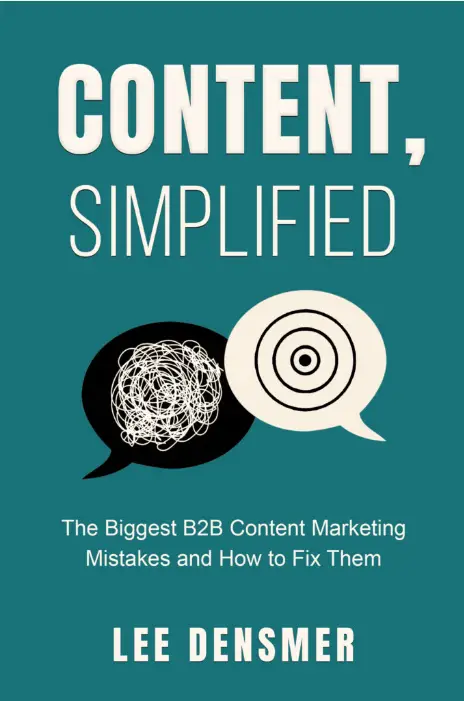
In this episode, Lee Densmer joins me to unpack what’s really happening inside B2B organisations and why so much good work never realises its full potential. Connect with her and let her know I sent you.
This article is inspired by the recent episode of the Social Media for B2B Growth Podcast hosted by Michelle J Raymond, which discusses this topic in more detail.
What B2B Content Waste Really Looks Like
You might have assumed that when we talk about B2B content waste, the problem is bad content. It’s not. Content waste shows up in much more familiar ways:
You publish something once and never use it again
Your best ideas sit buried on the website with no visibility
Sales isn’t using your content, even though you know it’s good
You keep creating new content without checking what already exists
The hardest one to admit – you know your team is working hard, but you can’t clearly point to what that content is actually doing.
That’s content waste.
Not because the content is poor, but because it’s not being used properly across the business.
Why Good B2B Content Never Gets Used
If you’re creating solid B2B content but it’s not being used across the business, that’s usually a sign that things are broken. It’s not about effort. It’s what happens next.
It usually comes back to this:
Teams don’t know the content exists
Nobody has trained them how to use it
It can’t be found in the systems you’re using
Teams are working in silos with no real information flow
If your sales team isn’t using your content, it’s often because it doesn’t reflect what they’re hearing in customer conversations. Trust us, if it doesn’t sound like them, they won’t use it.
So this isn’t about pushing more content out, it’s about making sure the right people know it exists, can find it, and actually see how it helps them do their job.
LinkedIn is One Channel. Not the Whole B2B Marketing Strategy
LinkedIn is a big place where B2B buyers go for information. But it’s still just one channel. You create something strong, post it once, and move on.
That’s where the content waste starts.
Your content shouldn’t live in one place. It should be used across multiple channels. One idea, multiple ways to show up.
For B2B marketing teams, that could look like:
A core idea on your website or blog
Turn the blog into LinkedIn posts and a newsletter
Ask employees to share in their own voice
Adapted blog into video or short-form content
As Lee put it, it’s one concept, multiple venues.
If your team is only using content once, you’re not getting the return on the effort you’ve already put in. A more practical way to think about this is your “centre of gravity”. That’s where your best content starts.
For some teams, that might be a research report, a blog, a podcast or a video series. From there, everything else is built. Instead of constantly asking “what do we post next?”, shift the question to:
“How do we get more value from what we’ve already created?”
That shift alone immediately reduces content waste.

Repetition Is Part of the Strategy
This is where B2B teams hold themselves back. You think you’ve already said it. You posted about it a few months ago. Maybe even last week. So you move on.
But your audience doesn’t see everything you publish. You are relying on the right person being online at the exact moment you post.
When you say it like that, it sounds a bit ridiculous. But that’s exactly what’s happening. I promise you will get bored with your message long before your audience does.
If your team keeps jumping between topics, your market won’t know what you stand for. But when you repeat what matters, across different formats and moments, that’s when things start to stick.
That’s when you become known for something.
What a Strong Content System Looks Like
When content is working, it’s not random. It’s coordinated.
There are a few things in place:
Sales, marketing and product teams are aligned
Content is shared and reused across the business
Insights from customer conversations feed into content
Someone is clearly responsible for making it all work
⚠️ That last one matters more than most teams realise. If no one owns it, it doesn’t happen.
Where To Start Fixing Your B2B Content Strategy
If you’re reading this and thinking, “this sounds like us,” please don’t create more content. Start with what you’ve already got.
Take a proper look at it.
What do you actually have?
What’s still relevant and just needs updating?
What should be archived or removed?
Where are the real gaps?
Most teams don’t even know what they’ve got, and that’s where the waste starts. Because there is usually good content sitting there. It’s hard to find, isn’t maintained, and isn’t being used across the business.
Fix that first. Then decide what needs to be created next.
The same content waste is most likely happening on your website. We recommend you check out this episode from our trusted SEO expert Nikki Pilkington to audit your website while you’re at it. Give the podcast a follow while you’re there.
Final Thoughts
Content isn’t usually the problem. The system around it is.
Right now, too many B2B teams are creating content that no one knows about, isn’t shared internally, and doesn’t help marketing or sales do their jobs.
That’s the gap.
So before you create another LinkedIn post or campaign, pause and ask your team:
Do we know what content we already have?
Can teams actually find and use it?
Are we building from one strong idea, or starting from scratch every time?
When teams are aligned, content is reused properly, and someone is clearly responsible for making it all work, everything changes.
You stop creating for the sake of it. You start creating content that actually gets used.
That’s when your work starts to support the business in a way people can see.
Book a time here to discover how we can help your B2B Grow – https://calendly.com/michelle-j-raymond/book-an-intro-call-15mins
Cheers
Michelle J Raymond