Marketing was never meant to be a reporting function and yet, for many B2B teams, that is exactly what it has become.
If you’re measured on followers, MQLs and pipeline contribution, it’s easy to believe that marketing’s job is to feed dashboards. The pressure to prove value upwards is real. But when reporting becomes the goal, customer understanding quietly slips down the priority list.
That’s where the drift begins.
Moni Oloyede and I sat down to unpack this and I suspect a lot of B2B marketers will quietly recognise themselves in it.
This article is inspired by the recent episode of the Social Media for B2B Growth Podcast hosted by Michelle J Raymond, with guest Moni Oloyede which discusses this topic in more detail.
Marketing Is Not Promotion
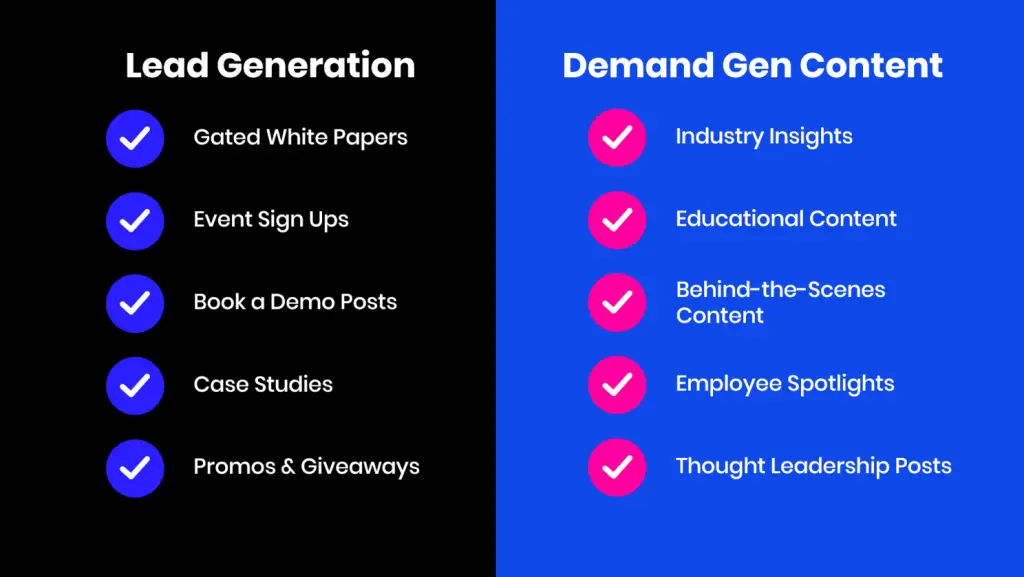
When marketing gets reduced to leads, it becomes promotion.
Register here. Download this. Visit us at this conference.
That’s not strategy. That’s distribution.
Marketing, at its core, is about:
- Understanding demand
- Shaping perception
- Positioning value
- Influencing behaviour
Leads are an outcome. They’re not the function.
During our conversation, Moni made a point that stuck with me. When you peel it back, much of what we’re optimising for is designed to serve stakeholders. “Your customers don’t care about those things.” They care about whether you understand their problem.
That shift in perspective changes everything.
The Problem With MQL Thinking
MQLs feel safe because they’re measurable. They give leadership something tangible to report.
But an MQL is usually defined internally. It’s not defined by the buyer.
A white paper download does not automatically signal intent. Email engagement does not guarantee readiness. When we treat tracked behaviour as proof of buying motivation, we’re building a strategy on assumptions and when we optimise around assumptions, we risk attracting the wrong problems and celebrating the wrong wins.
The deeper question is not “How many leads did we generate?”
It is “Are we attracting the right people with the right problem at the right time?”
Niching Is a Strategic Advantage
One of the biggest strategic levers in B2B marketing is clarity.
As Moni said “If you’re talking to everyone, you’re talking to no one.”
Niching down doesn’t shrink opportunity. It sharpens message-market fit. When your language reflects a specific pressure or challenge, the right audience feels seen.
Clarity does three things:
- It filters out poor-fit prospects
- It improves sales conversations
- It strengthens brand authority
Broad messaging feels safer. Specific messaging performs better.
I had to remind myself of this recently when I reviewed my own website b2bgrowthco.com. I realised that it really had no one particular audience in mind and certainly didn’t play to my strengths.
Reminder: The more precise the positioning, the stronger the response.
Attribution Has Limits
Attribution models promise clarity. Track every touchpoint. Credit every tactic. Prove impact.
But they are strongest where tracking is easiest. That means digital touchpoints are overrepresented, while offline influence is undervalued.
What attribution struggles to measure includes:
- Word of mouth
- Reputation over time
- Emotional trust
- Peer recommendation
Yet these are often the most powerful drivers in B2B decisions.
If you optimise purely for what you can measure, you risk underinvesting in what actually moves buyers.
Measurement matters. But context matters more.
I highly recommend you watch Moni’s presentation “Marketing Attribution Is A Scam: How to Make Better Decisions Without It.” The inisights in this may just be exactly what you need to refocus on what matters.
Misreading the Buyer Journey
You have heard the stat that 70 percent of the buyer journey is complete before someone contacts sales.
Many marketers interpret this as a mandate to create more content.
A more accurate interpretation is that buyers want control. They want to explore without pressure. They want information without commitment.
That is a trust dynamic.
If your marketing experience feels like a funnel trap, buyers will delay engagement. Not because they do not want to buy, but because they do not want to be chased.
Experience design matters as much as content production.
Go Back to Human
As Moni shared, everything can run perfectly 99 per cent of the time, and no one notices. One mistake, and suddenly everyone is looking at you. That pressure shapes how people think, decide and assess risk far more than product features ever will.
That’s the layer most marketing skips.
If your messaging only addresses technical problems, you’re speaking to a system. If you address the pressure, accountability and psychological weight attached to the role, you’re speaking to a human.
And humans make decisions.
Final Thoughts
Marketing is not broken, but it has drifted towards dashboards and away from people.
✅ If you are optimising for metrics instead of buyers, you will feel busy but misaligned. If your LinkedIn content feels reactive or overly promotional, that is usually a signal.
✅ Pause and ask yourself what you are really optimising for. More importantly who you are really optimising for.
✅ Clarity beats volume. Validation beats assumption. Empathy beats automation.
✅ Leads are the outcome of good marketing. They aren’t the starting point.
✅ Marketing has never been about proving activity. Its always been about understanding people well enough to influence behaviour.
Get the fundamentals right, and the metrics take care of themselves.
Cheers
Michelle J Raymond
PS: If you read this far, you obviously enjoy newsletters. Get more exclusive insights by subscribing to b2bgrowthco.com/newsletter